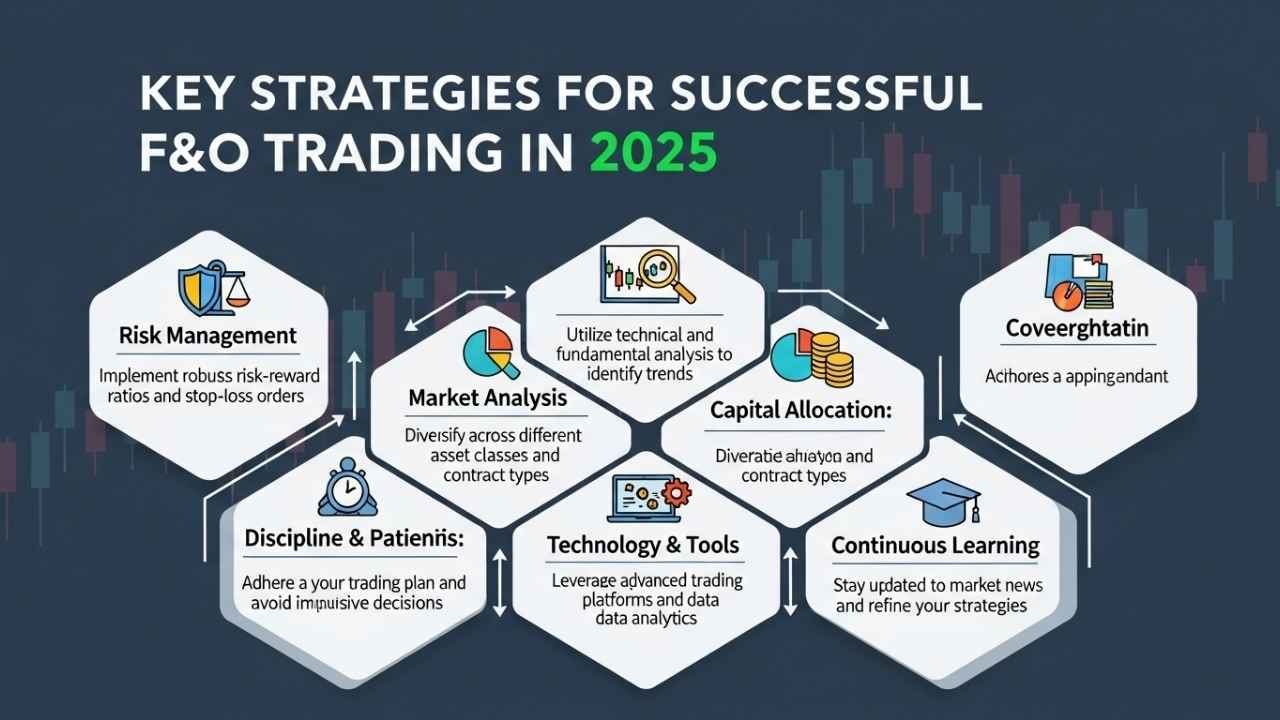

Hello fellow investors! You’ve been looking at the thrilling realm of Futures and Options (F&O) trading, and you’re not alone. F&O is a game of contracts in which you wager on future prices of stocks, commodities, or indices – futures obligate a future price, and options provide you the option (but not requirement) to buy or sell at a predetermined price. It’s a high-reward game, but it’s a riskier game, particularly in wild markets like we’ve experienced in 2025 with economic changes and world events.
The secret to success? Rock-solid strategies that enable you to ride the ups and downs without losing your shirt. In this article, I’ll dissect some tried-and-true strategies for futures and options trading, along with tips you can’t live without to get started. We’ll keep things simple, direct, and actionable – no jargon fest. Whether you’re new to trading or want to tidy up your strategy, these tips can help take your trading to the next level. Let’s get started!
Why Strategies Matter in F&O Trading
Let’s cover the basics before we get into the nitty-gritty. F&O trading is not gambling; it’s decision-making. With markets being shaped by anything from interest rates to technology booms in 2025, having a strategy minimizes emotional trades and maximizes profit. Strategies allow you to control risk, identify opportunities, and remain disciplined. Success comes from being consistent, not making one huge hit.
Top Strategies for Futures Trading
Futures trading is a contract to buy or sell an asset at some future point in time and price. Below are some tried strategies, derived from professional sources.
- Trend Following: Follow the direction of the market. When prices are going up (bullish), long by purchasing contracts; when going down (bearish), short by selling first. Employ indicators such as moving averages to verify trends. It works extremely well in risky 2025 markets.
- Mean Reversion: Wager on prices reverting to their mean following large fluctuations. If an asset is overbought (too high), sell; if oversold (too low), buy. Tools such as Bollinger Bands assist in identifying such instances. It works well in range-bound markets.
- Breakout Trading: Get in when prices break above support (low) or resistance (high) levels, anticipating a strong movement. Go long on the upside break or short on the downsides. High volume validates the breakout – ideal for commodities such as oil in 2025.
- Spread Trading: Purchase one futures contract and sell an equivalent one (such as different months or underlying assets) to gain from price discrepancies. This reduces risk through hedging. For instance, trade calendar spreads on the currencies such as EUR/USD.
- Scalping: Take quick, small profits from minimal price movements. Open and close positions in seconds or minutes through high liquidity. It is high-frequency but requires discipline and tools – best for day traders.
- Seasonal Spread: Take advantage of known patterns, such as agricultural products increasing in specific seasons. Sell low in out-of-season and buy high – consider corn futures in spring versus autumn.
- Pullback Approach: Buy during temporary downturns in an uptrend or sell during rally upswings in a downtrend. Wait for the “pullback” to obtain a superior entry price, utilizing technical indicators to sidestep traps.
These strategies can be blended according to your approach – begin with one and test on a demo account.
Also Read: 5 Best Forex Trading Apps in India (2025)
Essential Strategies for Options Trading
Options let you leverage small investments for big gains (or losses). Focus on these in 2025’s adaptive markets.
- Iron Condors: For stable prices, sell out-of-the-money call and put spreads. It profits from low volatility but limits losses. Monitor strikes as expiration nears.
- Vertical Spreads: Buy and sell same-type options (calls or puts) with different strikes but same expiration. Caps risk and reward – great for mild moves.
- Calendar Spreads: Buy a long-term option and sell a short-term one at the same strike. Profit from time decay differences, especially in low-volatility periods.
- Straddle and Strangle: Buy call and put with same (straddle) or different (strangle) strikes for big price swings without picking direction. Adjust based on moves – useful for earnings seasons in 2025.
- Delta Neutral Trading: Balance long and short positions for zero delta, minimizing directional risk. Rebalance often with real-time data – suits volatile times.
In 2025, trends show more focus on precision and volatility management, so adapt these to current events like rate cuts.
7 Must-Know Tips for F&O Traders
Beyond strategies, mindset matters. Here’s wisdom from pros:
- Build a Trade Plan: Set profit targets and exit rules before entering. Use stops to automate.
- Protect Positions: Use stop orders, not mental ones, to cut losses early.
- Diversify Smartly: Trade a few markets, not too many or too few, to spread risk.
- Start Small: Begin with mini contracts to learn without big pressure.
- Trade Both Sides: Go long or short – markets fall too!
- Learn from Margin Calls: Exit losing trades instead of adding funds.
- Be Patient: Focus on the big picture, not every tick.
Risk Management: The Real Key to Success
No trading strategy goes without risk management. Never risk more than 1-2% of capital per trade. Apply stop-losses, diversify, and keep emotions under control. In 2025, with AI tools and data analytics, remain updated through apps and learning.
Read More: 5Paisa App – Features, Benefits, Set-up & More
Final Thoughts: Trade Smart in 2025
F&O trading can be exhilarating and profitable if you’ve got the right approaches such as trend following for futures or iron condors for options. But don’t forget, it’s not get-rich-quick – practice, learn, and evolve. If you’re a beginner, begin with paper trading.
Got a favorite strategy or trading anecdote? Share in the comments! And if this helped, bookmark or share it. Happy trading!
Disclaimer: This is informational only, not financial advice. Trading in F&O carries high risk of loss. Trade only after consulting a professional advisor and your own research.