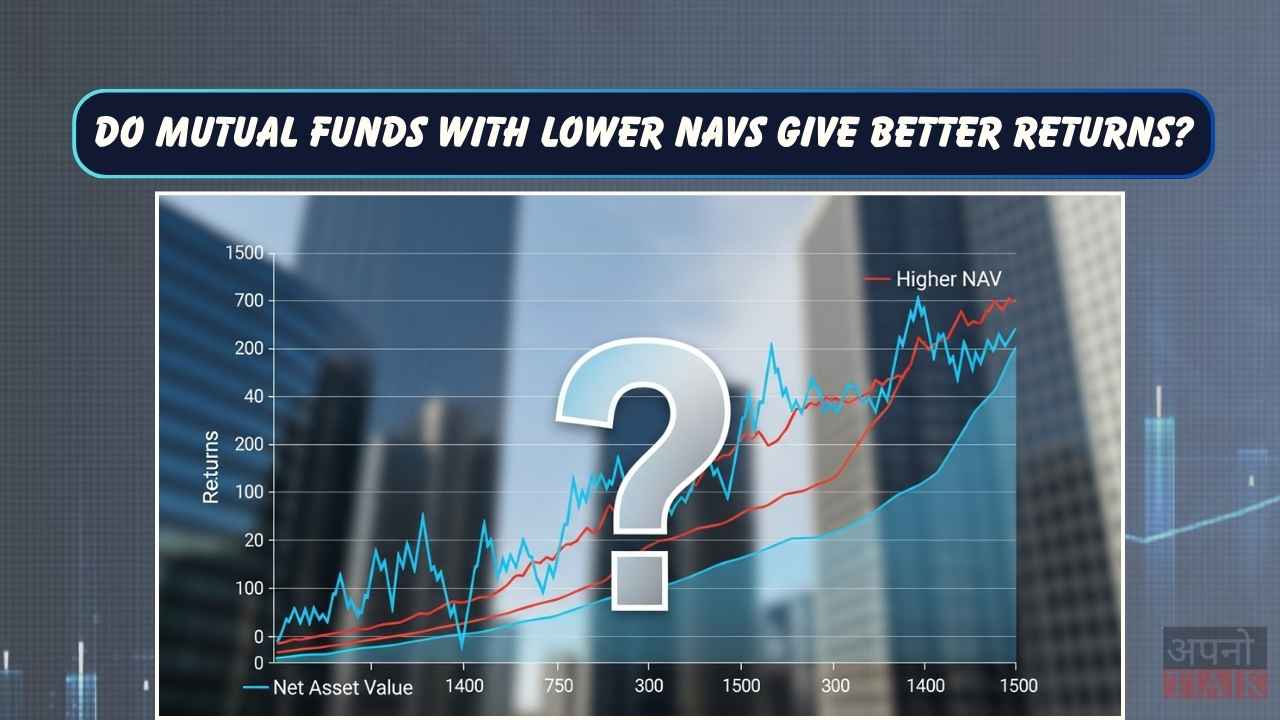

Mutual funds are one of the safest and most popular investment options for people looking to grow their money. Many investors believe that the NAV (Net Asset Value) of a mutual fund is a key factor in deciding how much return they will get. But is this true? Let’s find out.
What is NAV?
NAV stands for Net Asset Value. It is the price of one unit of a mutual fund. NAV is calculated by subtracting the fund’s liabilities from its total assets and then dividing by the number of units held by investors. NAV changes every day based on the value of the underlying assets in the fund.
Does a Lower NAV Mean Better Returns?
Many people think that a mutual fund with a lower NAV will give better returns. But this is a myth. Let’s understand why with an example:
- Suppose you buy 200 units of a mutual fund at a NAV of ₹50. If the NAV increases by 10%, it becomes ₹55. Your total investment value is ₹11,000.
- Now, suppose you buy 100 units at a NAV of ₹100. If the NAV increases by 10%, it becomes ₹110. Your total investment value is also ₹11,000.
In both cases, your return is the same. The NAV itself does not decide the return. What matters is the percentage increase in NAV, not the absolute value.
Why NAV Can Be Low or High
- A fund may have a low NAV because it is new, has performed poorly in the past, or is not very popular.
- A fund may have a high NAV because it has been around for a long time, performed well, or is well-known.
A higher NAV does not guarantee better returns, and a lower NAV does not mean the fund will perform better in the future.
What Should You Focus On?
Instead of looking at NAV, focus on:
- The fund’s past performance
- The fund manager’s experience
- The underlying assets and their growth potential
- The fund’s expense ratio
Conclusion
The return on a mutual fund is not decided by its NAV. It’s important to analyze the market and the performance of the fund’s assets. NAV is just the price per unit and does not indicate future returns. Always consult a financial advisor before making any investment decisions.
Related Post:
- Top 5 Stock Market Apps in India for New Investors
- What Is an IPO? How to Apply for IPOs in India
- Nifty 50 vs Sensex – What’s the Difference?
- What Is the Stock Market? A Beginner’s Guide for Indian Investors
- 10 Trading Indicators Every Trader Should Know
- How Many Mutual Funds Should I Own?
Disclaimer: This article is educational only and not financial advice. Trading carries risks—only trade money you can afford to lose. Always research thoroughly and consider consulting a financial advisor before making trading decisions.